Find Eco Friendly Kraft Paper Cardboard Box for Food, Gifts, Cosmetics
Source 30 eco friendly kraft paper cardboard box options to compare specifications, sizes, and customization capabilities. Review material types and printing methods to select the right packaging for your product needs; compare the available evidence and request quotations based on your requirements.
Key considerations
Products List
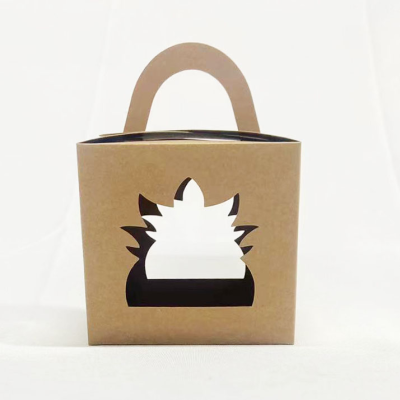


Comprehensive Sourcing Guide
Eco Friendly Kraft Paper Cardboard Box Sourcing Guide
Eco friendly kraft paper cardboard boxes occupy a practical middle ground between commodity packaging and fully customized retail presentation. For B2B buyers, the category spans everything from small gift and jewelry cartons to larger food, cosmetic, electronics, and garment packaging, all built on kraft or cardboard paper substrates. The "eco friendly" positioning usually rests on the material itself — recyclable, often unbleached kraft — rather than on third-party claims, so buyers should treat sustainability language as a starting point for verification rather than a guaranteed attribute.
Sourcing this category effectively means balancing three dimensions at once: specification fit (size, board weight, print), commercial terms (MOQ, lead time, tooling), and documentation (compliance, customization records). The listings observed for this keyword show considerable variation in origin cities, product models, and packing methods, which signals a fragmented supply base. Buyers who arrive with a clear spec sheet and a defined verification checklist consistently negotiate better than those who request quotations based on a photo alone. This guide walks through each decision point in the order a professional buyer would encounter it.
Product Scope and Observed Listing Signals
The listings under this keyword describe paper cardboard cartons intended for a wide set of end uses: gifts, cosmetics, food, health care products, electronics, jewelry, garments and shoes, greeting cards, and letters. Sizes are listed variously as "any size," "small," "middle," and custom, indicating that most suppliers in this space produce to order rather than from fixed catalogs. Product models such as Andres 0721, Andres 1008, Andres 1119, Q24, FP1236, and 2020073010 appear as supplier-internal references rather than industry-standard formats, so always ask what a model number actually contains before assuming two "similar" boxes are interchangeable.
Other signals worth noting: several listings declare two-sided printing with offset printing and logo printing included, while one lists single-sided printing. Packing methods range from standard paper packing to palletized shipment, which affects landed cost calculations. Origins include Shanghai and Qingdao, China. Weight declarations vary widely — from under 0.5 kg to over 1.5 kg — so buyers should not infer board thickness or strength from listing weights alone. Sample lead times of roughly 3–5 days and production lead times of about 10–15 days recur across listings, but these should be confirmed per supplier rather than assumed.
Technical Specifications to Verify
Before requesting quotations, convert your concept into a measurable specification sheet. At minimum, define external dimensions (length × width × height), board material and grammage, box style (e.g., fold-up, top-and-bottom, drawer, corrugated mailer — corrugated paper is explicitly listed among the paper types in this category), and whether any inserts, windows, or closures are required. Because one observed listing specifies 1000ml capacity under standard, food-contact applications do appear in the category; if your use involves direct food contact, dimension the box to the actual filled volume and confirm the inner surface treatment is suitable.
Second, specify the decoration package precisely: number of printed sides (listings show both single and two-sided printing), printing process (offset printing is observed; confirm whether digital or flexo alternatives are offered for short runs), logo artwork format, and color matching method such as a Pantone reference. Surface handling descriptions should be matched to your expectations — a listing that says "beverage" as surface handling likely reflects a data-entry artifact, so ask the supplier to describe the actual finish, such as matte or gloss lamination, in plain terms. Request a physical pre-production sample before tooling or mass production is released.
Compliance and Safety Documentation
Compliance requirements depend on what the box will contain and where it will ship. Listings in this category reference certification entries including CE/EU, FDA, CIQ, LFGB, and EEC, but a listing-level declaration is not proof — ask each supplier for the actual certificate documents, validity dates, and the scope of the certified product. LFGB and FDA references are typically relevant when packaging touches food, while CE/EU and EEC references relate to European market entry; buyers should map each certificate to their destination market and product use rather than accepting a blanket list.
Beyond certificates, request material safety information for inks, adhesives, and any coatings, particularly for food or cosmetic applications where indirect contact with the contents is possible. If sustainability claims matter to your brand, ask what documentation the supplier can actually provide — for example, whether kraft material can be traced to a recognized source or whether only an informal "eco friendly" description is offered. Do not treat the absence of a certificate in a listing as disqualifying, but do treat every listed certification as unverified until a document is supplied. Keep copies of all certificates in your procurement file for audit purposes.
Cost Drivers and Commercial Terms
Observed prices in this keyword range from USD 0.01 to 1.15 per piece, and observed MOQs range from 100 to 100,000 units, with at least one listing citing a 5000-piece MOQ. This spread reflects differences in box size, board weight, printing complexity, and order structure rather than supplier quality. Small decorative cartons sit at the low end; larger, multi-side printed or laminated boxes move toward the top. Obtain quotes only against your finalized specification so that price comparisons are like-for-like rather than across different box constructions.
Confirm the commercial package in writing: unit price at your target quantity, price breaks at higher tiers, tooling and plate charges for custom printing (and whether they are amortized or refundable), sample cost and whether it is credited against the first order, Incoterms, and payment terms. Lead times of roughly 10–15 days for production and 3–5 days for samples recur in the listings, but these are nominal — confirm the schedule against your specific design, and build in buffer time before peak retail seasons. Clarify packing format (paper packing versus palletized) because it affects freight cost and warehouse handling on your side.
Supplier Qualification and Quality Control
Qualify suppliers through a staged process rather than a single inquiry. Start with a shortlist check: confirm the supplier produces paper cardboard packaging as a core product, verify customization capability is genuine (OEM/ODM acceptance is observed in this category), and request factory information or third-party verification where available. Then request samples from two or three candidates against the same specification sheet so that board quality, fold precision, print registration, and color accuracy can be compared directly. Discrepancies at the sample stage are far cheaper to resolve than after mass production.
For production orders, define inspection criteria before the order is placed: dimensional tolerance, board thickness, print color match, glue and fold strength, and packaging count per carton. Decide whether you will rely on supplier self-inspection, photos and videos of production, or third-party inspection services, and state this expectation in the purchase contract. For food-contact or export-facing orders, request the batch documentation described in the compliance section at shipment time, not afterward. Keep a record of defects found in each shipment so that supplier performance can be tracked across orders and corrective actions requested with evidence.
Long-Term Procurement Checks
Once a supplier relationship is established, move from transactional checks to longitudinal performance management. Review each order against agreed lead times, defect rates, and documentation completeness, and hold a periodic review with the supplier to discuss recurring issues. Confirm that certificates claimed at qualification remain valid at renewal dates, and re-verify them annually or whenever the supplier changes material, ink, or adhesive sources — a change in raw material inputs can invalidate prior compliance assumptions without any notice to the buyer.
Also monitor your own specification drift over time. Cost pressures or urgent restocks often tempt teams to accept substitutions — a lighter board, a single-side print instead of two, a different lamination — and these substitutions compound quietly. Lock the agreed specification in a signed product sheet, require written approval for any deviation, and re-run a physical sample check whenever a new production batch deviates from the original. Finally, maintain at least one qualified alternate supplier for your key box formats so that capacity constraints, price shifts, or regional disruptions do not leave your packaging supply single-sourced at the worst possible moment.
FAQs
What is the typical lead time for custom eco friendly kraft paper cardboard boxes
The typical lead time for custom eco friendly kraft paper cardboard boxes is 10 to 15 days for full production. Sample lead times are shorter, usually taking 3 to 5 days. These timelines allow for design approval and quality checks before mass production begins.
Can eco friendly kraft paper cardboard boxes be customized with logos and printing
Yes, these boxes support customization including logo printing and offset printing. Buyers can choose between single-sided or two-sided printing options. Customization services are available to meet specific branding requirements for various product categories.
What certifications are available for eco friendly kraft paper cardboard boxes
Available certifications include CE/EU, FDA, CIQ, LFGB, and EEC. These standards ensure the packaging meets safety and environmental requirements for different markets. Buyers should verify which specific certification is required for their target region.
What is the minimum order quantity for eco friendly kraft paper cardboard boxes
The minimum order quantity is typically 5000 pieces. This MOQ allows manufacturers to optimize production efficiency and maintain consistent quality. Buyers should confirm if smaller trial orders are possible before placing a large bulk order.
Which materials are used in eco friendly kraft paper cardboard boxes
These boxes are primarily made from cardboard and paper materials. Some variants may use corrugated paper for added durability. The materials are selected to be eco-friendly and suitable for various applications including food and cosmetics.
What are the common applications for eco friendly kraft paper cardboard boxes
Common applications include packaging for food, cosmetics, electronic products, and gifts. They are also used for arts and crafts, jewelry, and health care products. The versatile design supports both retail and industrial packaging needs.
Can eco friendly kraft paper cardboard boxes be shipped from China
Yes, many suppliers are located in China, including regions like Shanghai and Qingdao. This origin offers competitive pricing and established export logistics. Buyers should consider shipping costs and customs regulations when sourcing from these locations.